Super Mario Bros. was the first game I tested with 3dSen, and it is still one of the clearest ways to see what the emulator does. World 1-1 is so familiar that the added depth is easy to notice straight away.
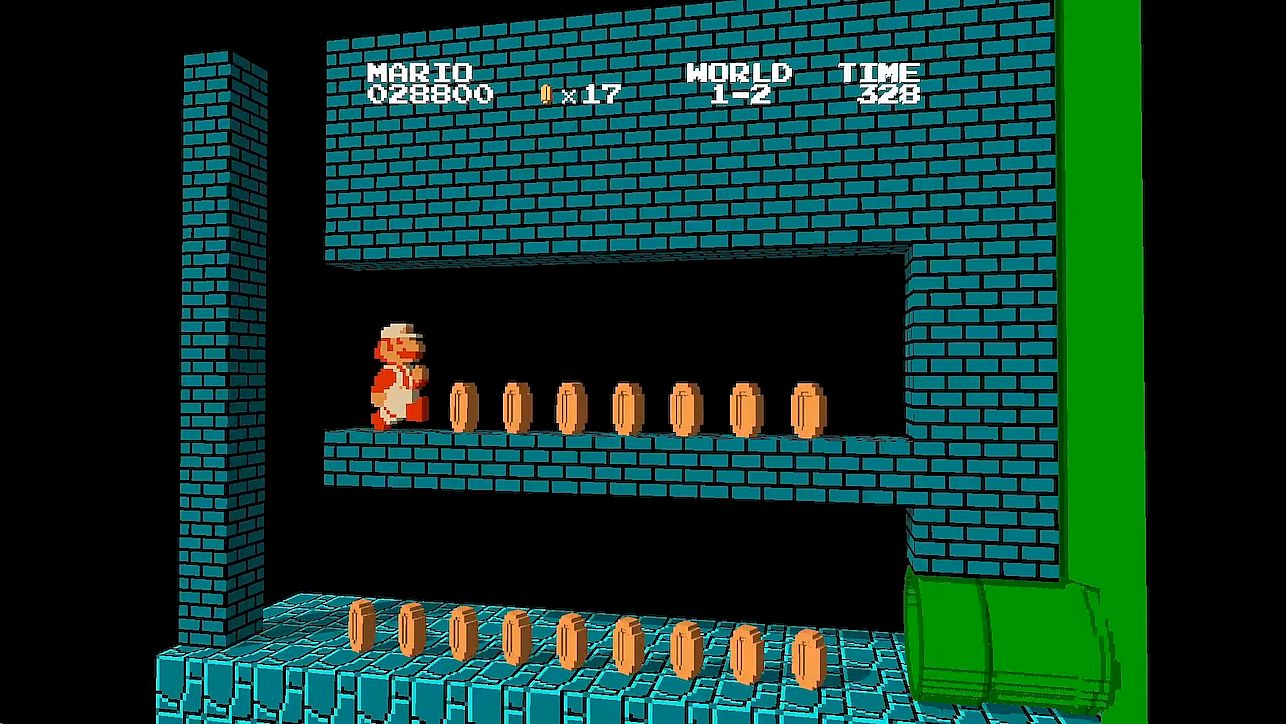
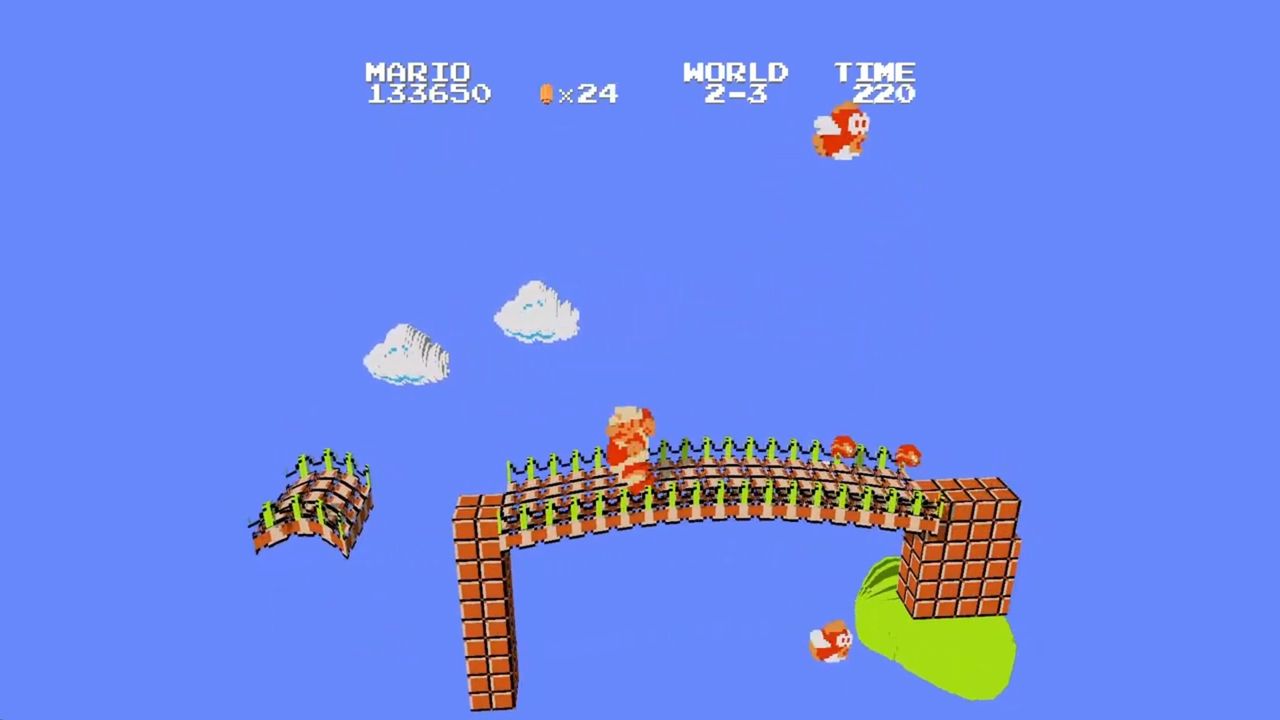
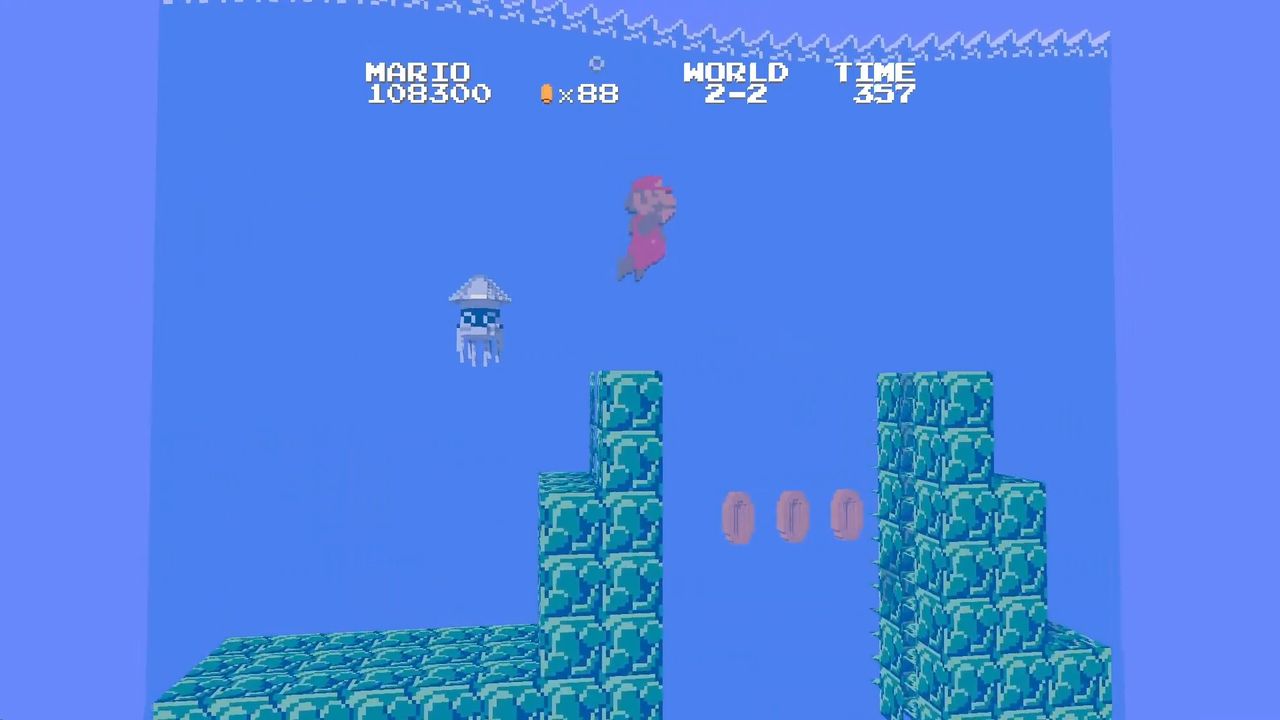
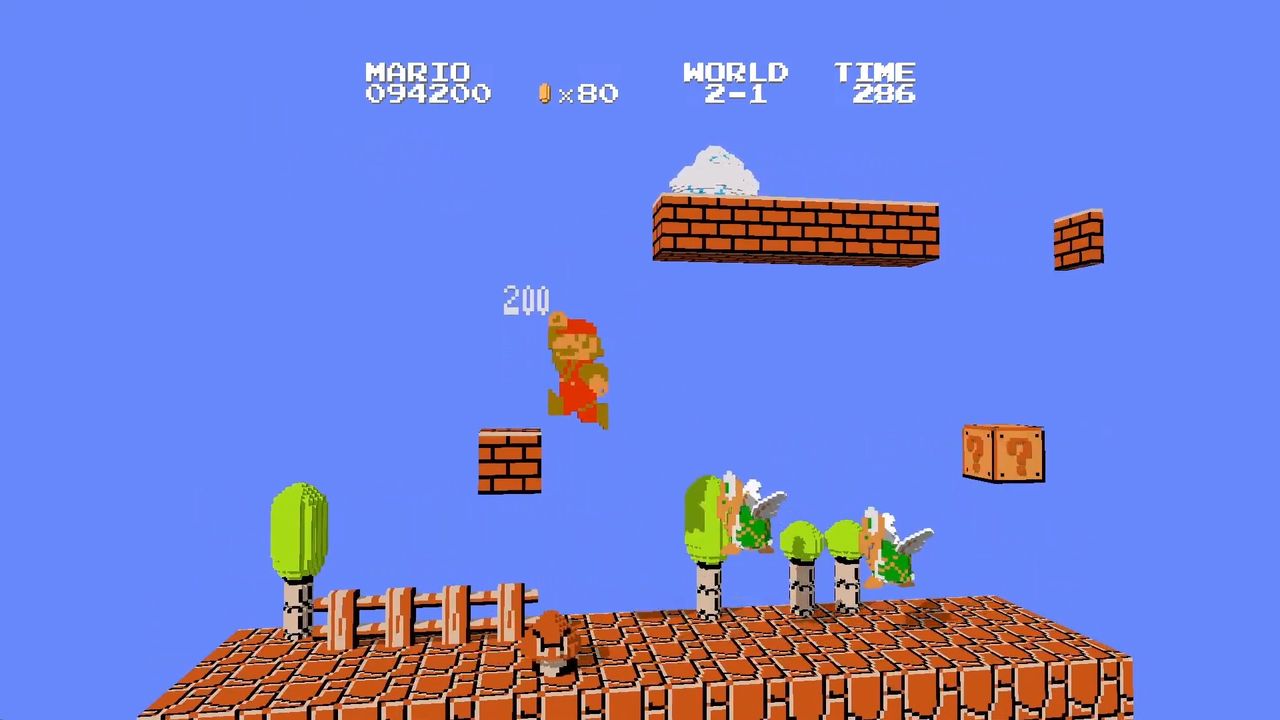
In 3dSen, pipes become cylinders with hollow tops, and Piranha Plants sit inside them instead of appearing through a flat rectangle. Brick and question-mark blocks have thickness, Goombas have a front and back, and the castle towers rise out of the background.
The free camera reveals details hidden by the original side view: the layers of clouds, the relative height of the pipes, and the enclosed shape of the underground levels. 3dSen reconstructs that geometry from the NES output frame by frame, in real time.
In VR mode, the Mushroom Kingdom has a clear sense of scale: the flagpole is tall and the pits have real space between their edges. In AR mode via Virtual Desktop Passthrough, World 1-1 becomes a playable miniature on your desk or floor. Every mode keeps the original physics, timing and collision unchanged.