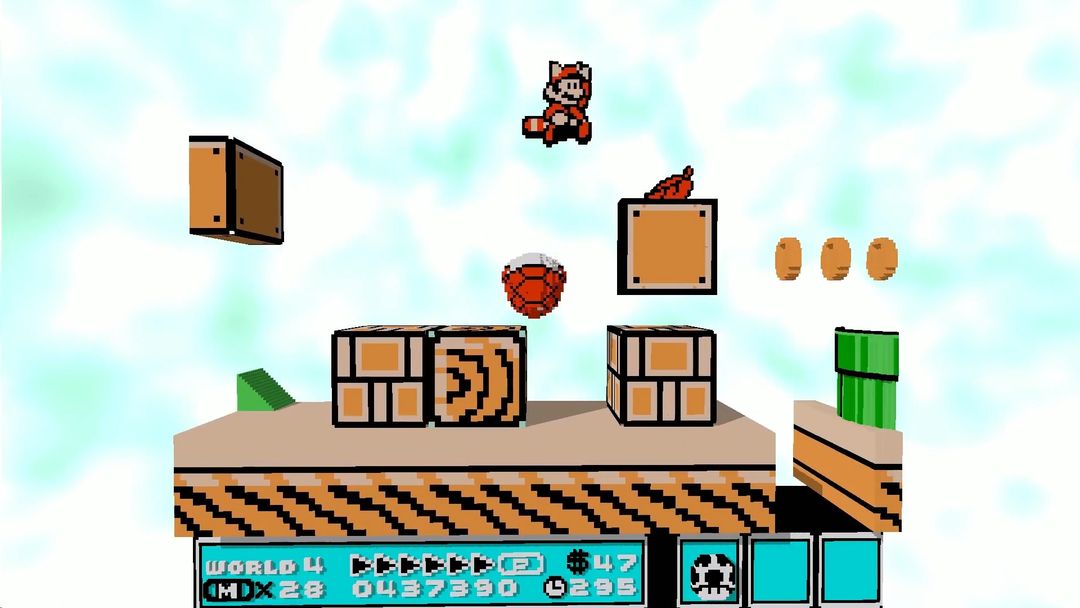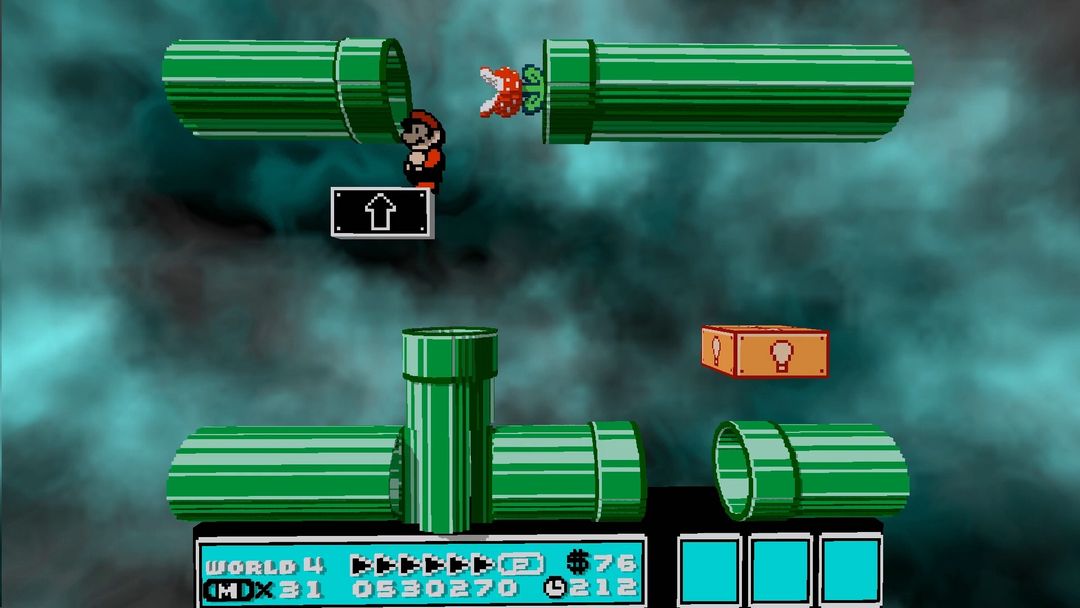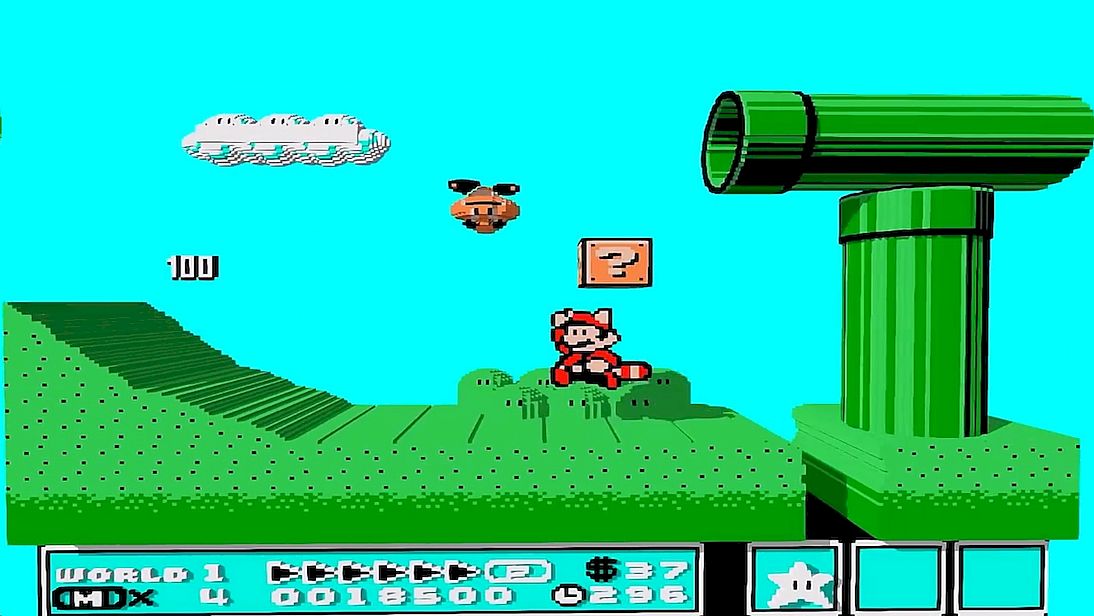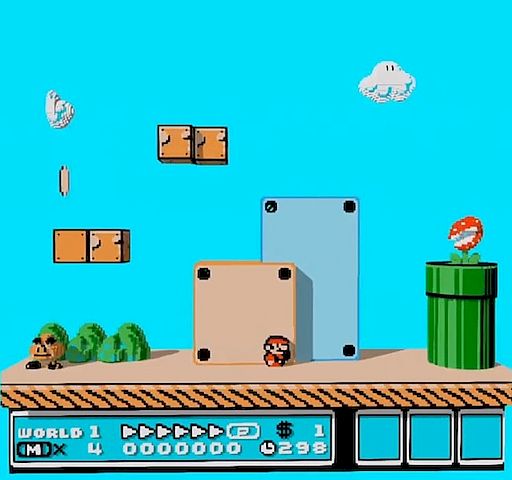
Super Mario Bros. 3 has more worlds, enemies and kinds of level than its predecessor — desert, water, sky, ice, pipe mazes and airships, all connected by a world map. A free camera gives each of them a different feel. Reviewers who replayed the game in 3dSen called it "the new way to play this game" and said it felt "like playing it for the first time again."
The world map shows the effect first. Its hills, Hammer Bros., Toad Houses and airship occupy separate depths, so you can pull the camera back and view the whole world as a layered diorama.
Inside the levels, pipes become hollow cylinders and question blocks sit at different depths. Note blocks, ? boxes, brick blocks and ground tiles each have their own thickness. Bullet Bills leave shaped cannon barrels, while Piranha Plants sit inside their pipes rather than a flat slot.
The camera is especially useful in boss rooms, castle interiors, airship sequences and cloud bonus levels. You can tilt up, pull back or move close to first-person to look along a pipe. One reviewer described being able to "almost play Mario 3 in first-person."
In VR mode, the same geometry appears at room scale. The airship has visible depth between its deck and propellers, the cloud levels feel high up, and underground sections feel enclosed. The original physics, timing and collision remain untouched in every mode.