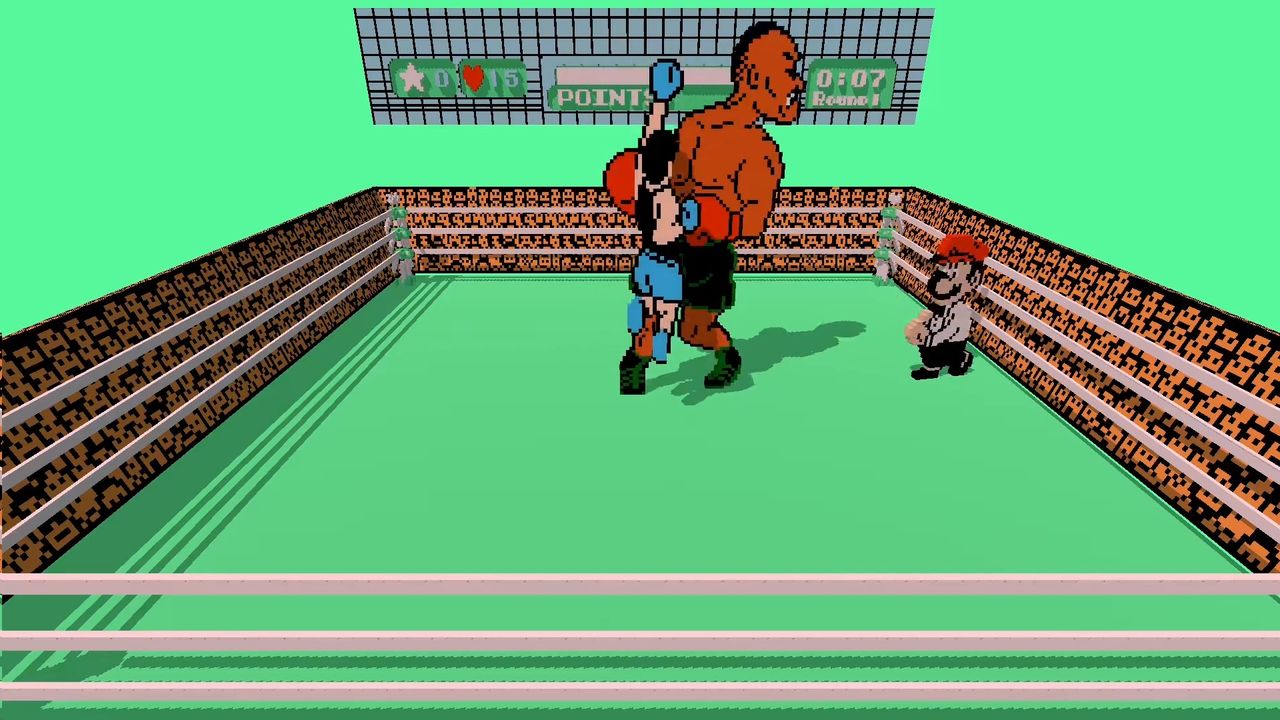
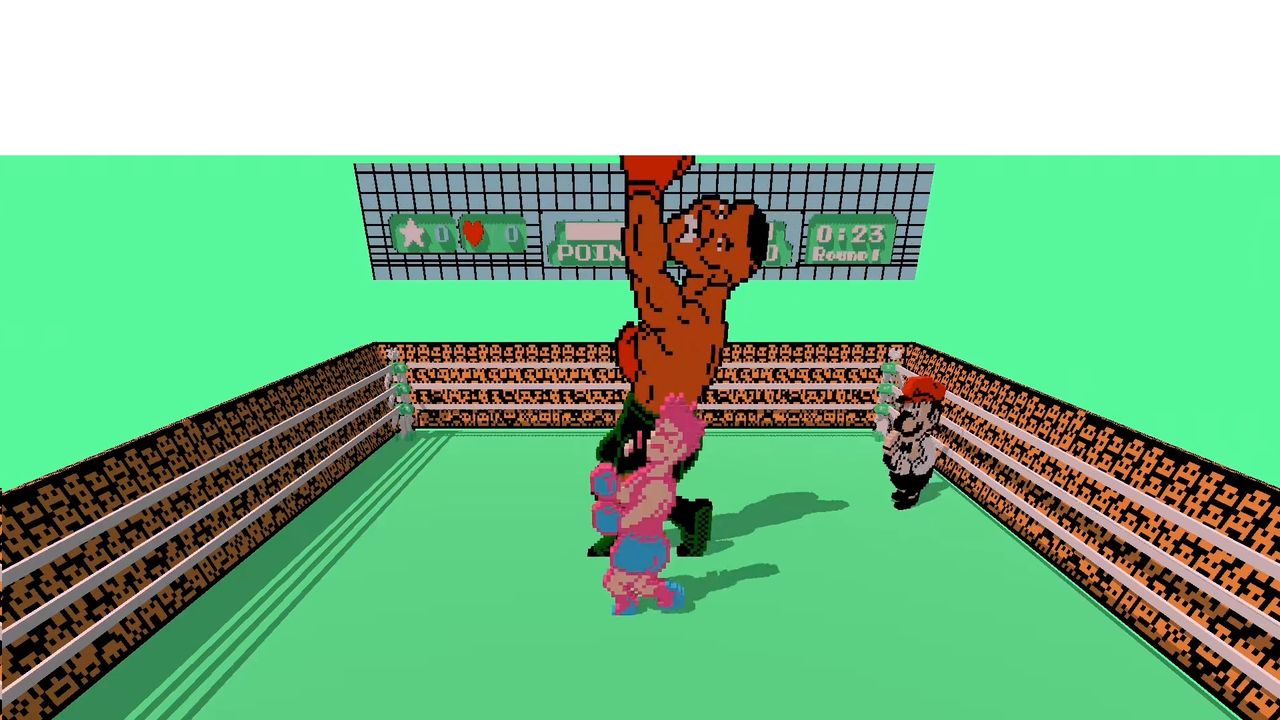
Punch-Out!! is staged as a boxing match viewed from the audience. In 3dSen, the ring is a fully modeled 3D space, including its ropes and Mario walking inside it as he counts. Little Mac and his opponent stand at opposite ends and move across the canvas when they punch.
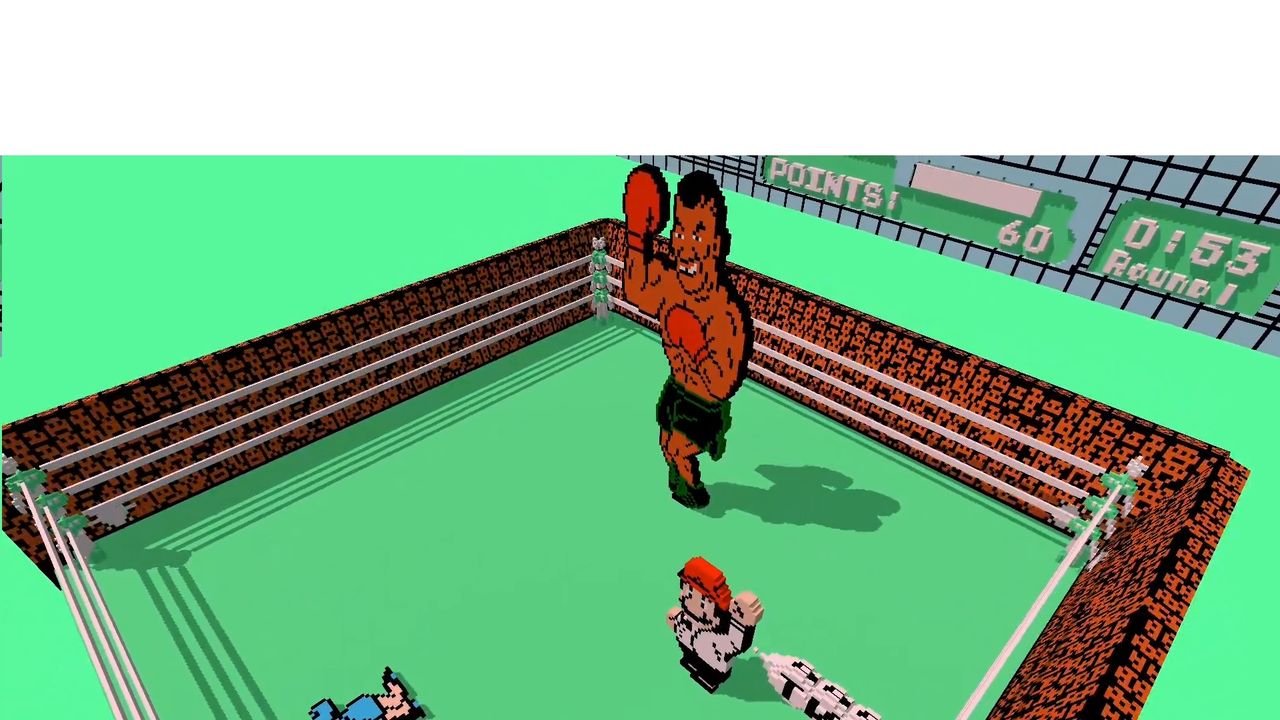
The camera can also use that space. When Little Mac is knocked down, the view drops to the mat and looks up at the opponent while Mario stands nearby and counts. It offers no tactical advantage, but it is a perspective the original game could not show.
VR adds motion controls for the full fighting moveset. Punch straight for the body or at an angle for the face. Lean left or right to dodge, squat to duck, and hold both hands in front of your face to block. Push both hands forward together for a star punch. These moves are read from the positions of your hands and head rather than mapped to buttons.
It is a physical way to play. One reviewer was sore the next day after sweating and leaning through repeated dodges. Leans and ducks can occasionally be confused, which matters in later fights that require precise dodge-and-counter timing. Standard controller buttons still work — A and B map to face and body punches — so you can combine them with motion when needed.
The original 1987 NES code, patterns, timing windows and tells remain untouched. Motion controls simply let you respond with your body. On a Quest headset, connect through Steam Link or use a wired Steam connection.