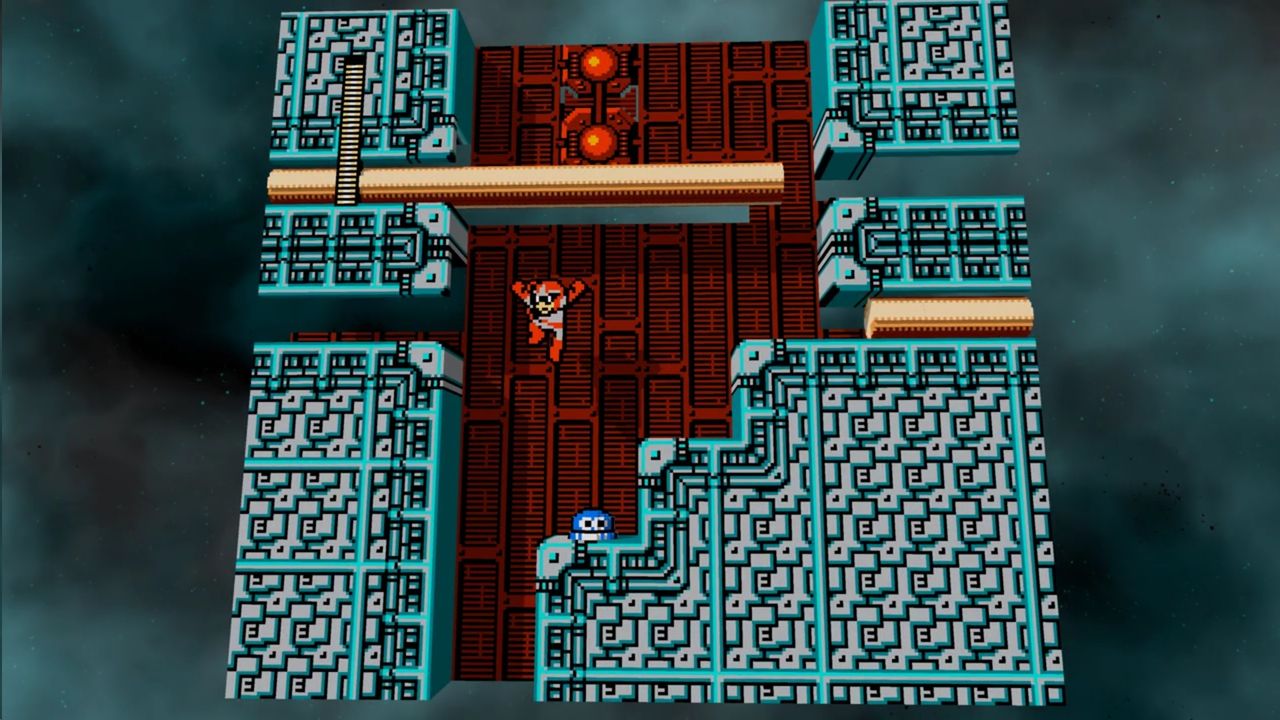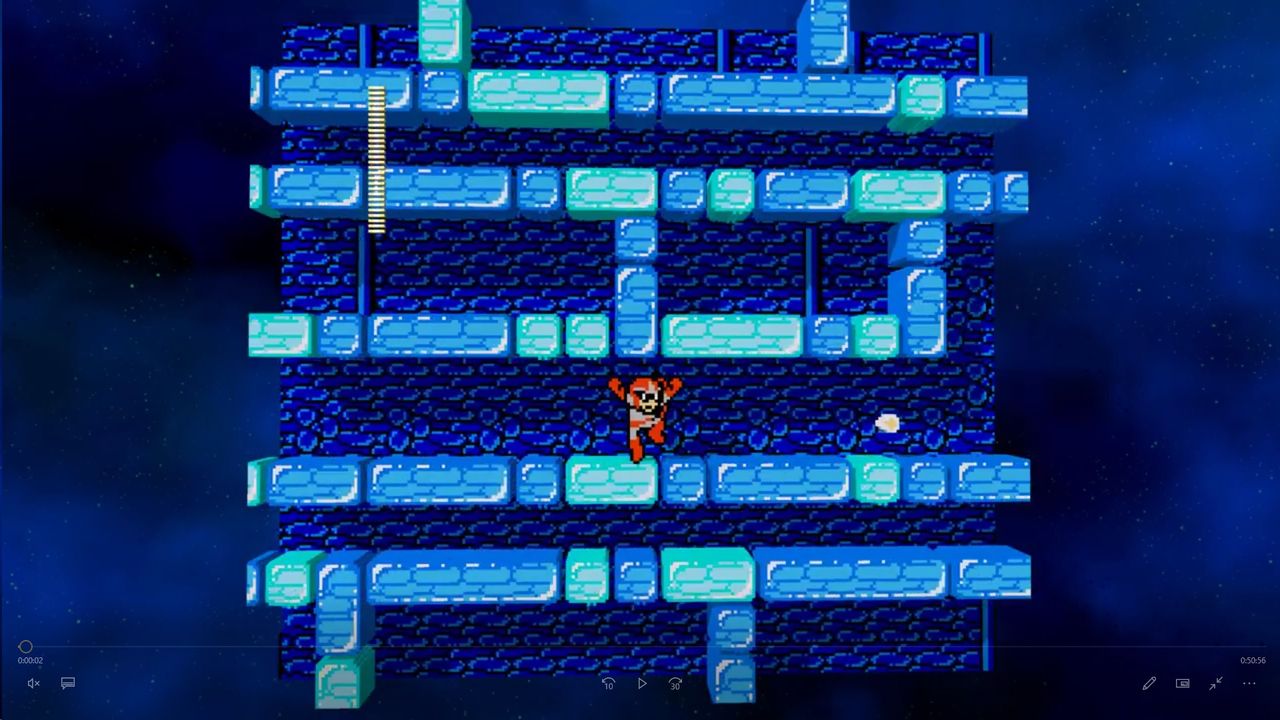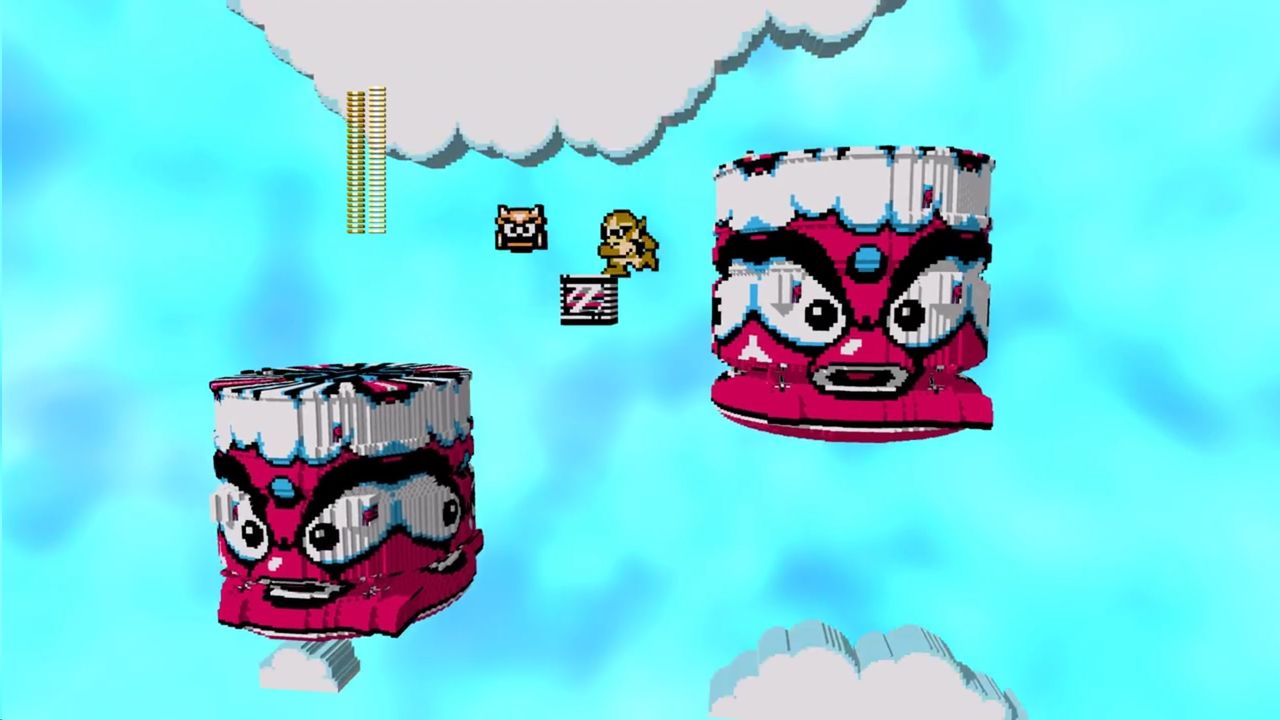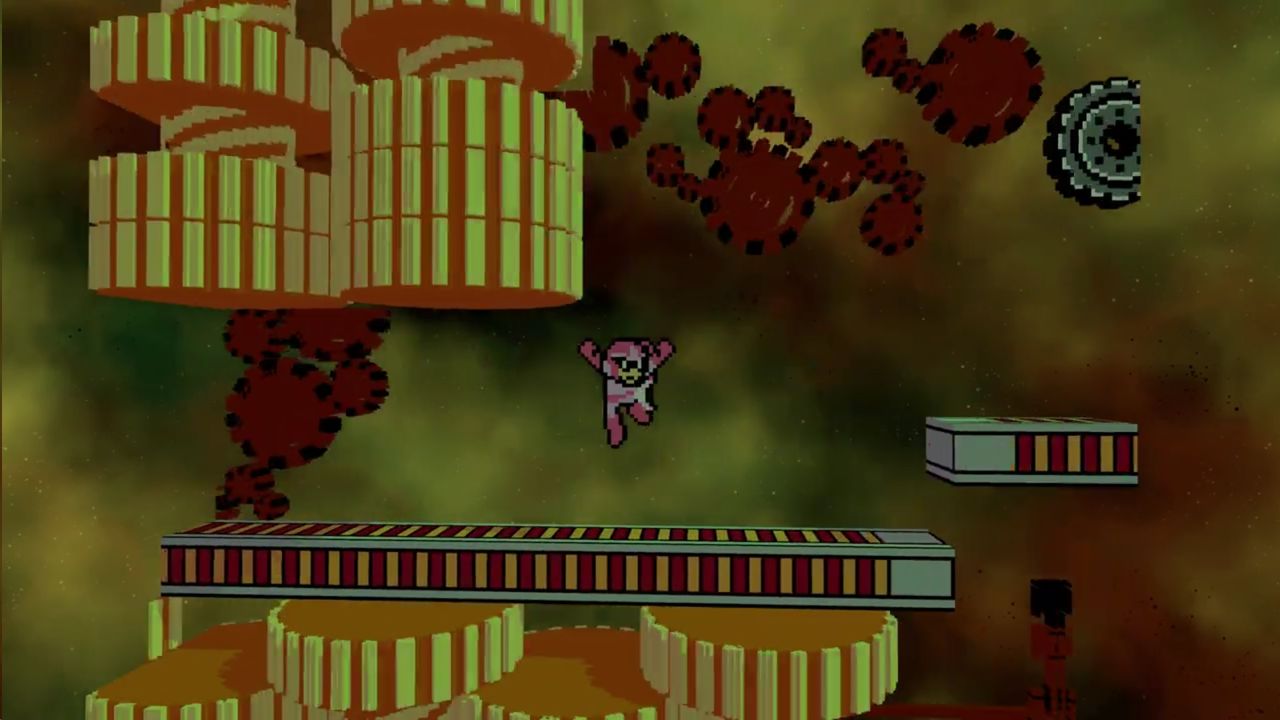
Mega Man 2 still scrolls like the original, but 3dSen rebuilds each screen as a 3D voxel scene. You can move close to a corridor, pull back to see more of a stage, or lower the camera to view a row of spikes from the side. Mega Man, the platforms, bosses and moving hazards all have volume.
Each stage keeps its own character in 3D. Metal Man's gears become thick wheels rotating in space, and the Red Devil enemies at the start of Air Man's stage have a clear position and direction. Some elements become full 3D objects while others remain on separate layers. One reviewer wanted to replay the whole game simply to see how each element had been treated.
Camera angle matters in a precise platformer. Tilt too far and jumps or moving hazards can become harder to judge. The same reviewer kept taking damage from an early enemy until he returned the camera to a flatter angle.
In VR, the stage stretches out in front of you at room scale, with platforms, bosses and enemies set at the depths defined by the profile. In AR via Virtual Desktop Passthrough, the same playable diorama sits in your space at miniature scale.
The jumps, boss patterns and weapon choices stay exactly the same. Only the way you see the stage changes.