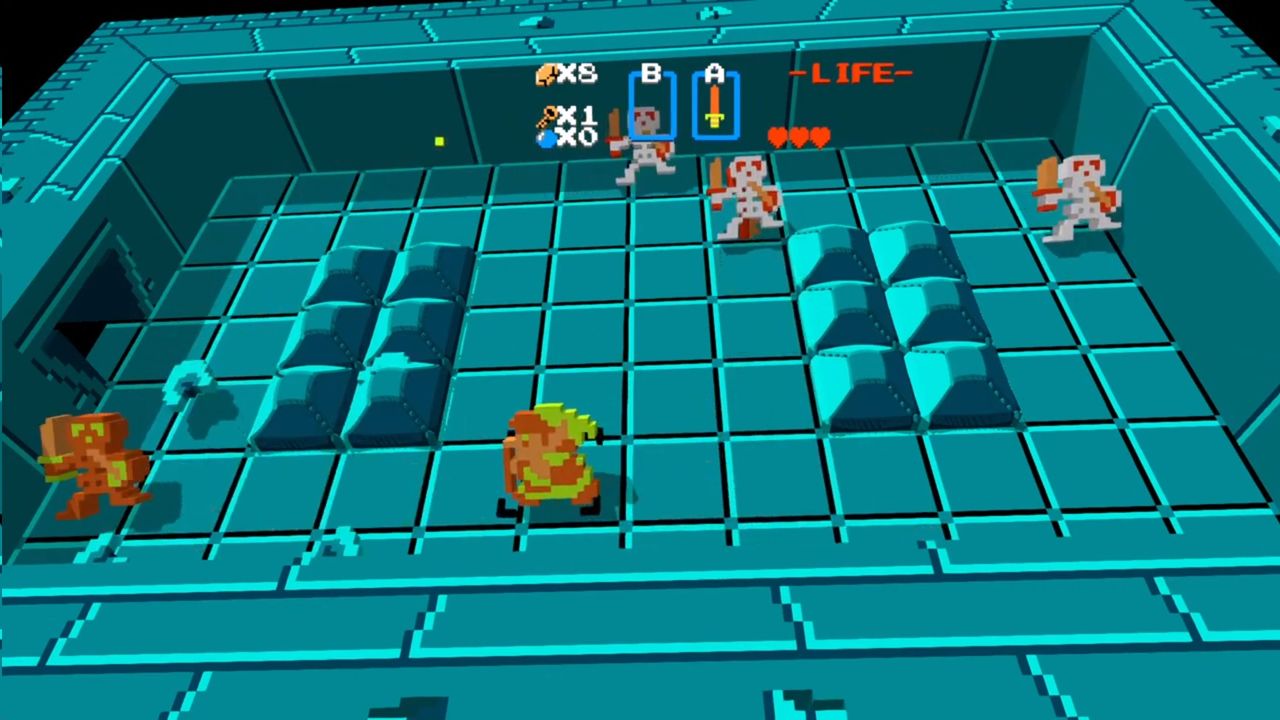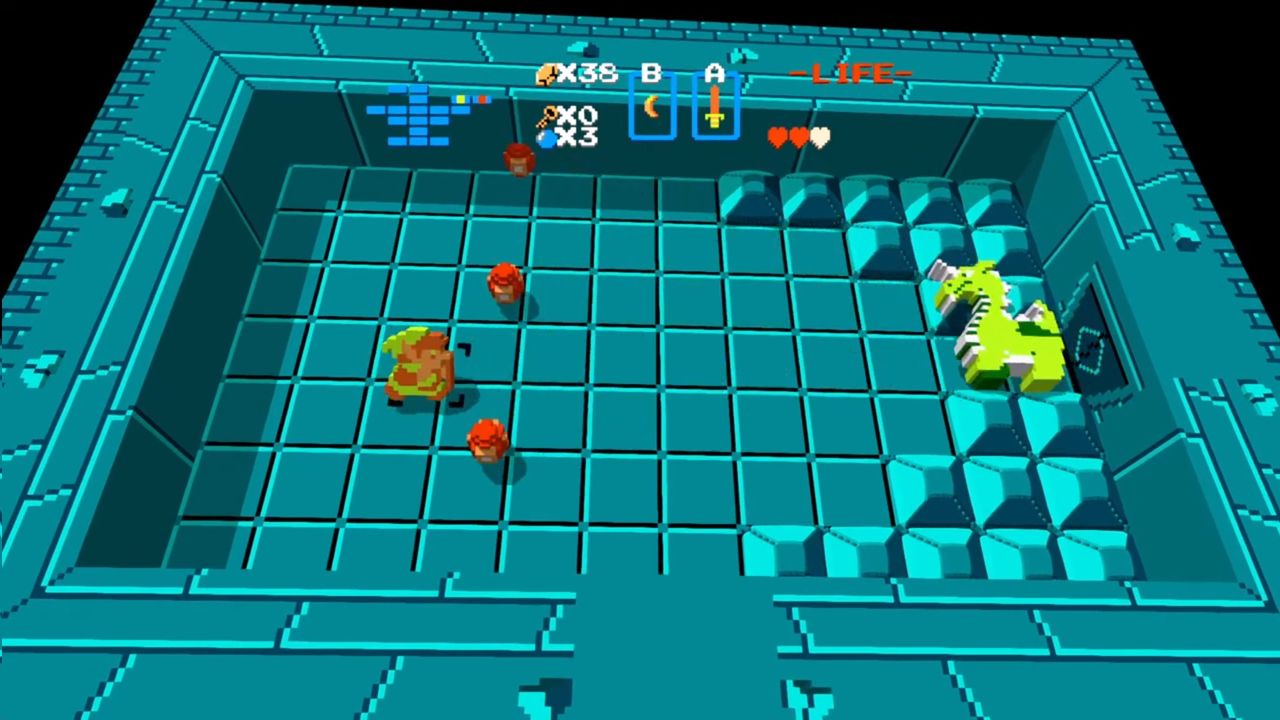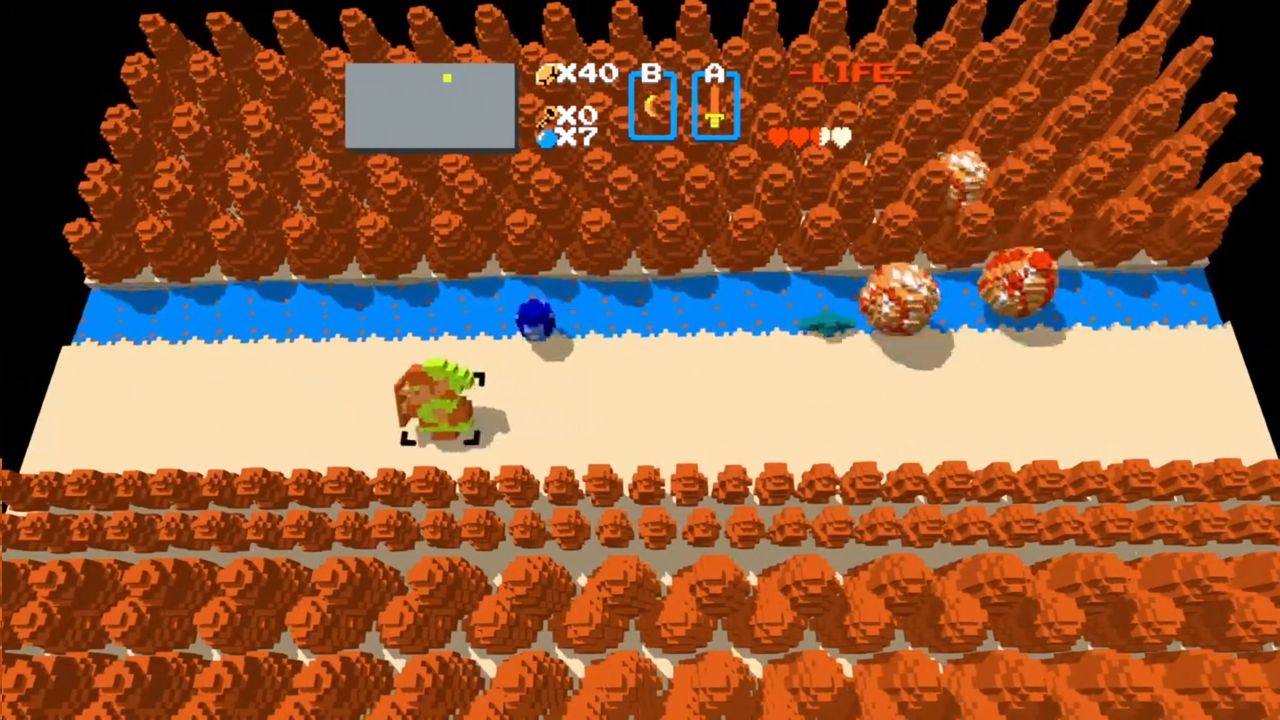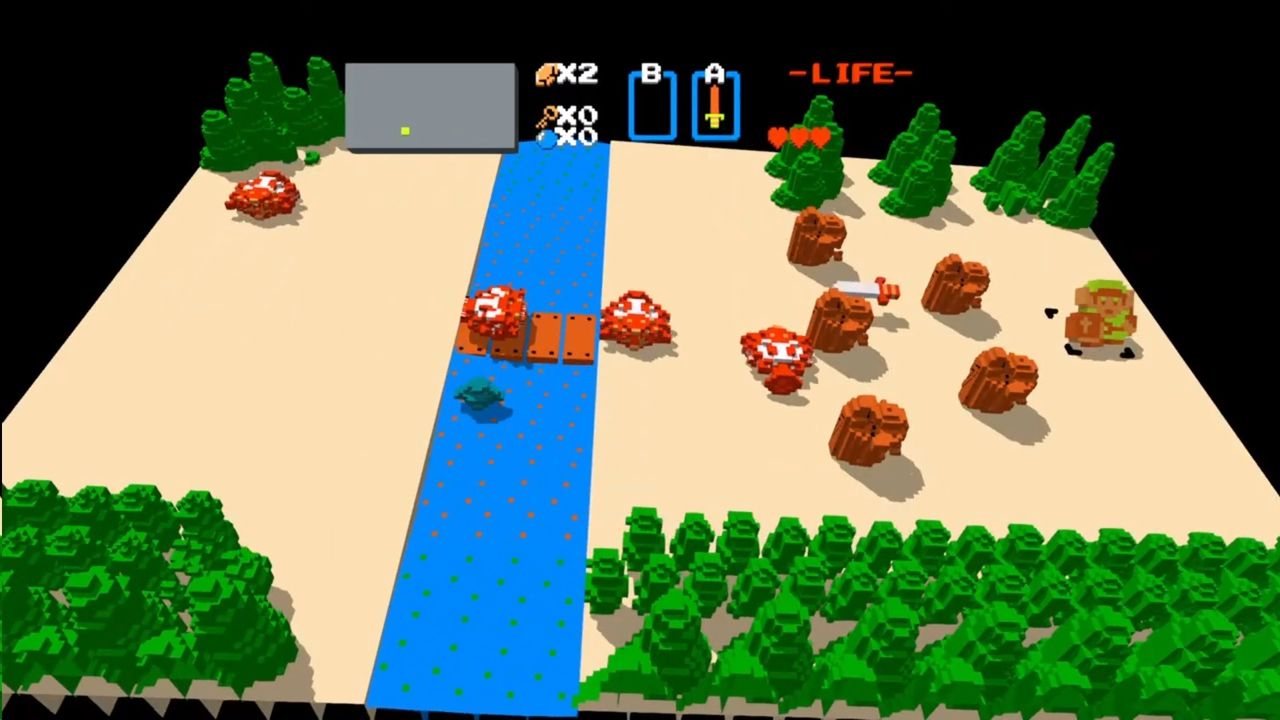
The original Hyrule is a grid of top-down screens. In 3dSen, each screen becomes a 3D voxel diorama you can rotate from a bird's-eye view to near side-on. Bushes, trees, rocks and dungeon walls all have volume.
One reviewer who tested several games called Zelda his favourite and said this game alone made 3dSen worth buying. Another returned after thirty years and felt that 3dSen kept the nostalgia while making the game feel new.
Small details make the added depth clear. The sword beam rotates in flight, the boomerang casts a moving shadow, and water appears to flow beneath low bridges. Levers extend from dungeon walls, while doorway shadows move across the floor as Link passes through.
The profile also handles the game's side-scrolling indoor scenes. When Link enters a staircase transition or certain hidden rooms, 3dSen switches to a side view, then returns to top-down when he leaves. One profile script chooses between the two camera modes from the current game state.
In VR, the HUD becomes a separate layer above Hyrule, animated water gains a stronger sense of motion, and Link's sword appears within reach. The items, combat and hidden rooms stay unchanged; only the view of Hyrule is different.