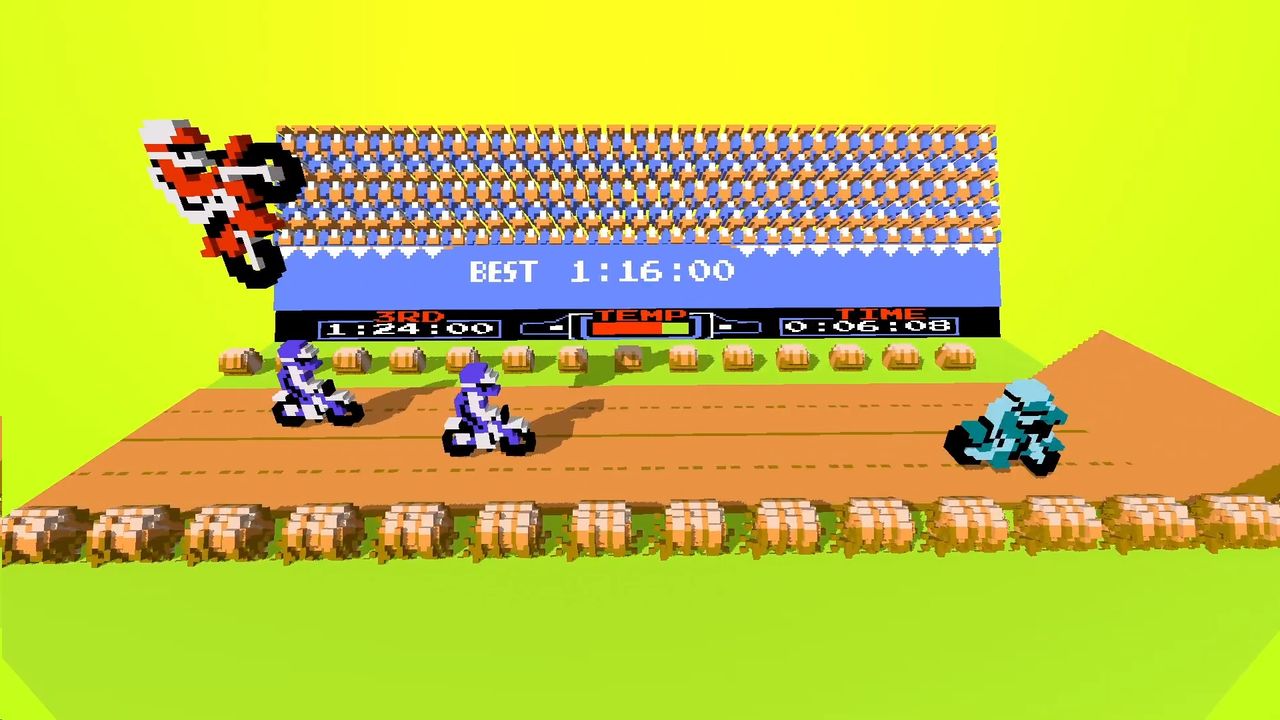
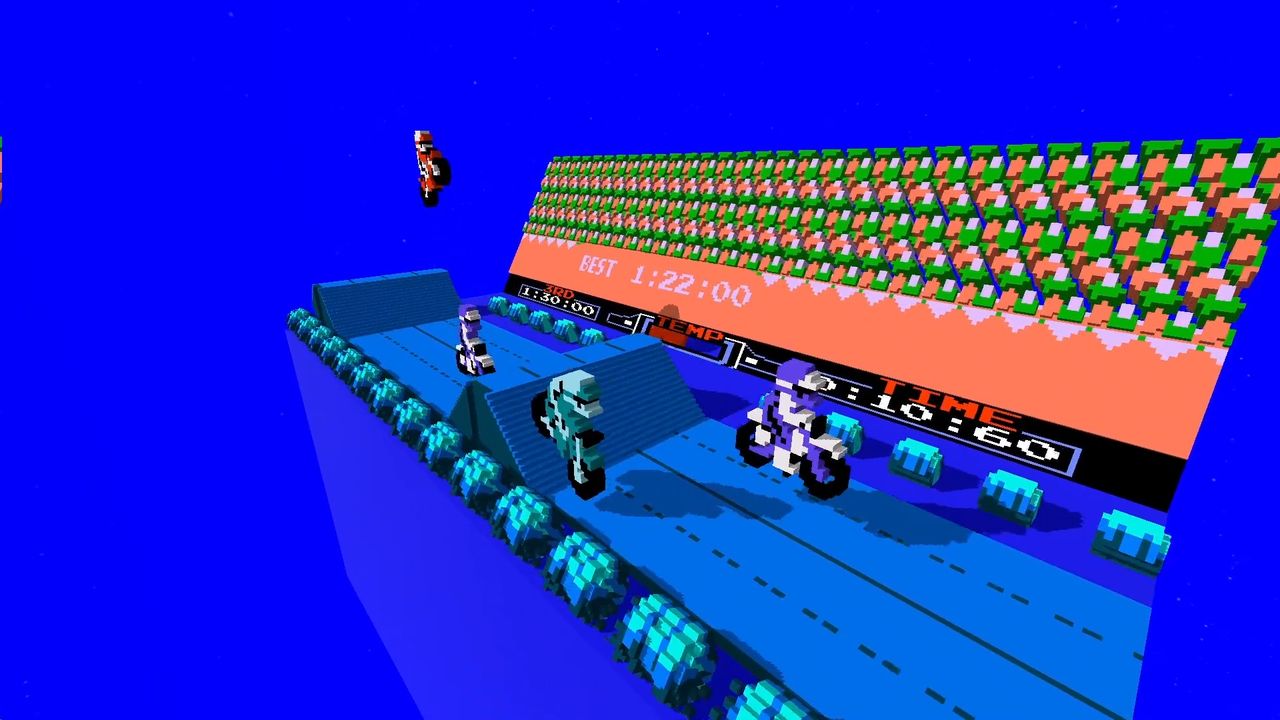
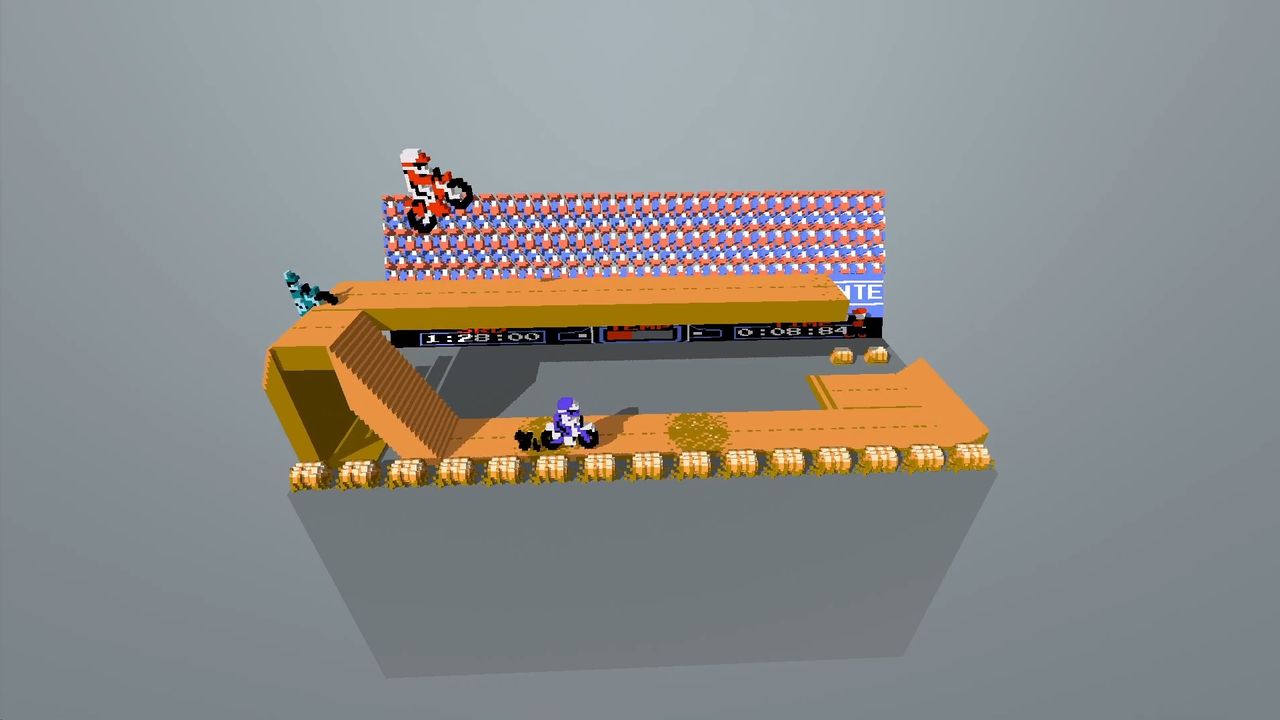
Excitebike uses a pseudo-3D view: bikes stay the same size, ramps are painted as trapezoids, and jumps move the rider up and down the screen. In 3dSen, the lanes have width, the ramps have height, and each bike follows an arc through the air above the course.
This was one of the harder profiles to build. Most profiles can read each object's position, tile and animation frame from NES memory. Excitebike stores the rider's position on the track, but not the bike's height during a jump. The profile has to infer that third dimension from the rest of the game state, frame by frame.
A reviewer who played most of the 3dSen catalog called this the definitive way to experience Excitebike. He pointed to the temperature gauge, now positioned as a 3D element in the playfield, the added thickness of each obstacle, and the way other bikes occupy separate lanes instead of stacking on a flat plane.
The free camera works from most angles, including a view behind the bike. A strict first-person view is less practical: it suggests left-right steering, while the original controls are tilt-based. Reviewers who tried that angle repeatedly fell off the bike.
In VR, the track extends ahead of you in a third-person rider view, with nearby bikes visibly occupying other lanes. In AR via Virtual Desktop Passthrough, the course runs across a desk or coffee table at miniature scale. The original physics, overheating timer, lane changes and crashes all remain untouched.