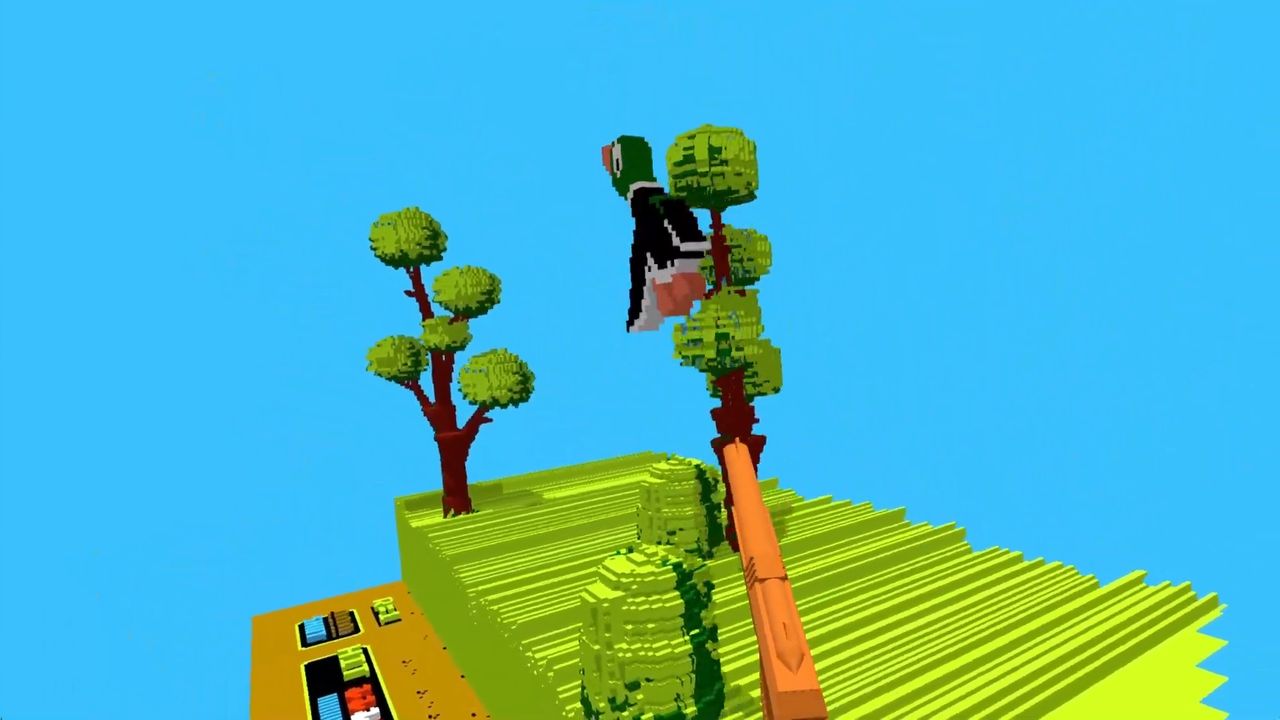
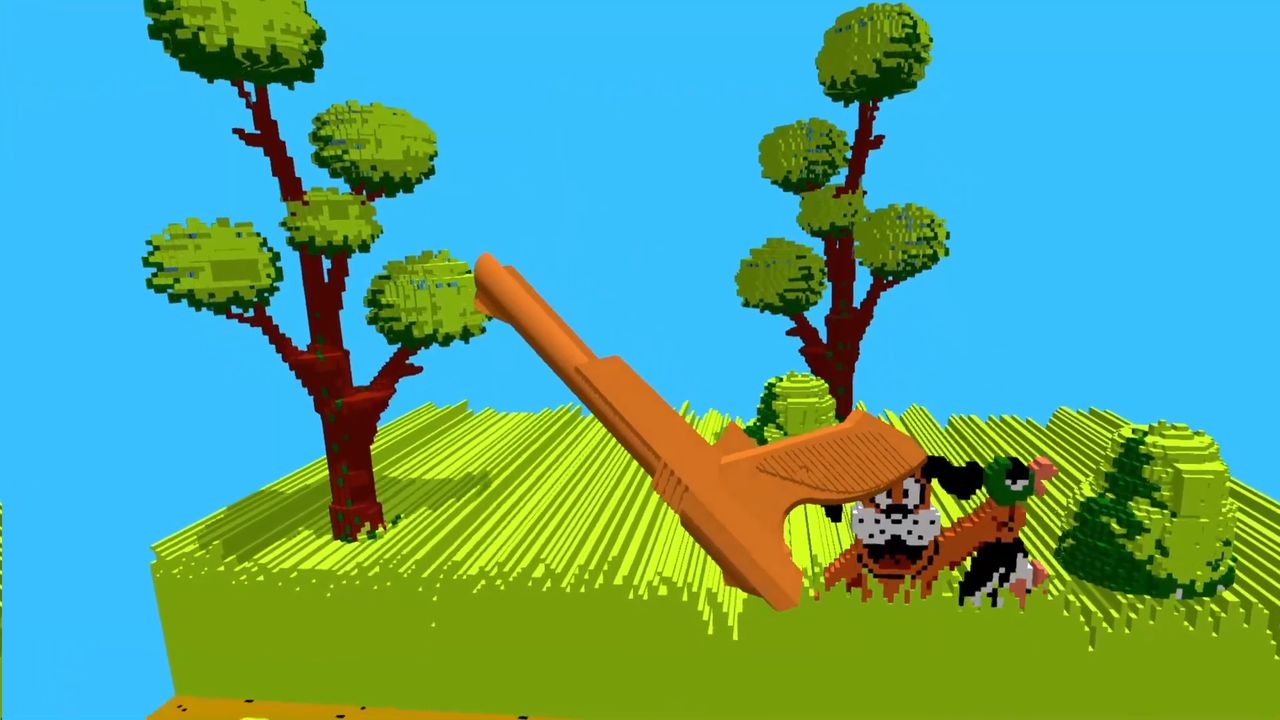
Duck Hunt was designed for a Zapper and a CRT: the screen flashed and the gun read where you were pointing. Its ducks followed simple paths in a flat 2D space because the input device could not use depth.
The 3dSen profile adapts the game to motion controllers in two ways. It rewrites the original XY flight paths, then adds movement along the Z axis. Both changes are needed because VR aiming and binocular depth perception make the original patterns too easy to hit.
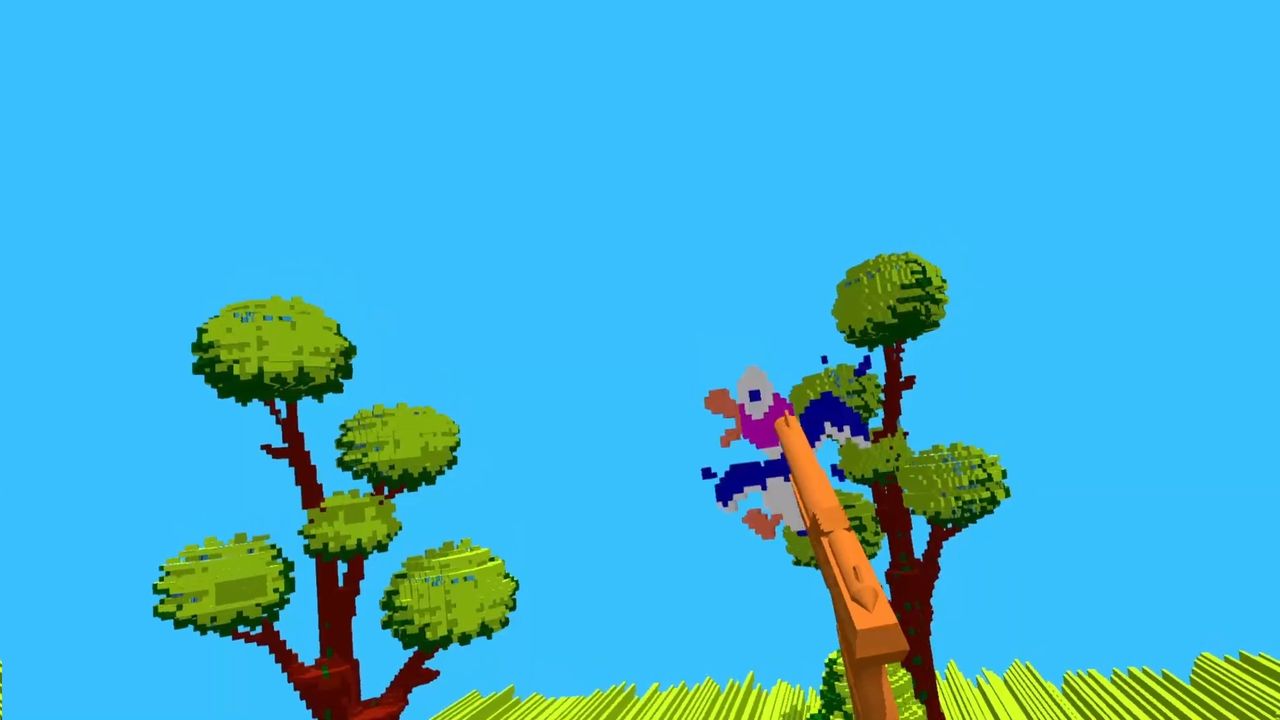
The new paths use sharper curves, quicker direction changes and tighter pacing. Ducks also fly at different distances, moving toward or away from you as well as across the scene. Two birds that cross on screen may be on separate planes, so leading one no longer guarantees a hit on the other.
Together, those changes make aiming spatial. You follow each bird, judge depth and lateral movement together, and point the controller where the duck is going rather than where it is.
Most 3dSen profiles change presentation; this one also changes duck behaviour. The rules, scoring and dog remain the same, but the flight patterns are designed for an input system the 1984 game did not have. PC mode includes the new paths in 3D, while the profile is primarily designed for motion-controller aiming in VR.