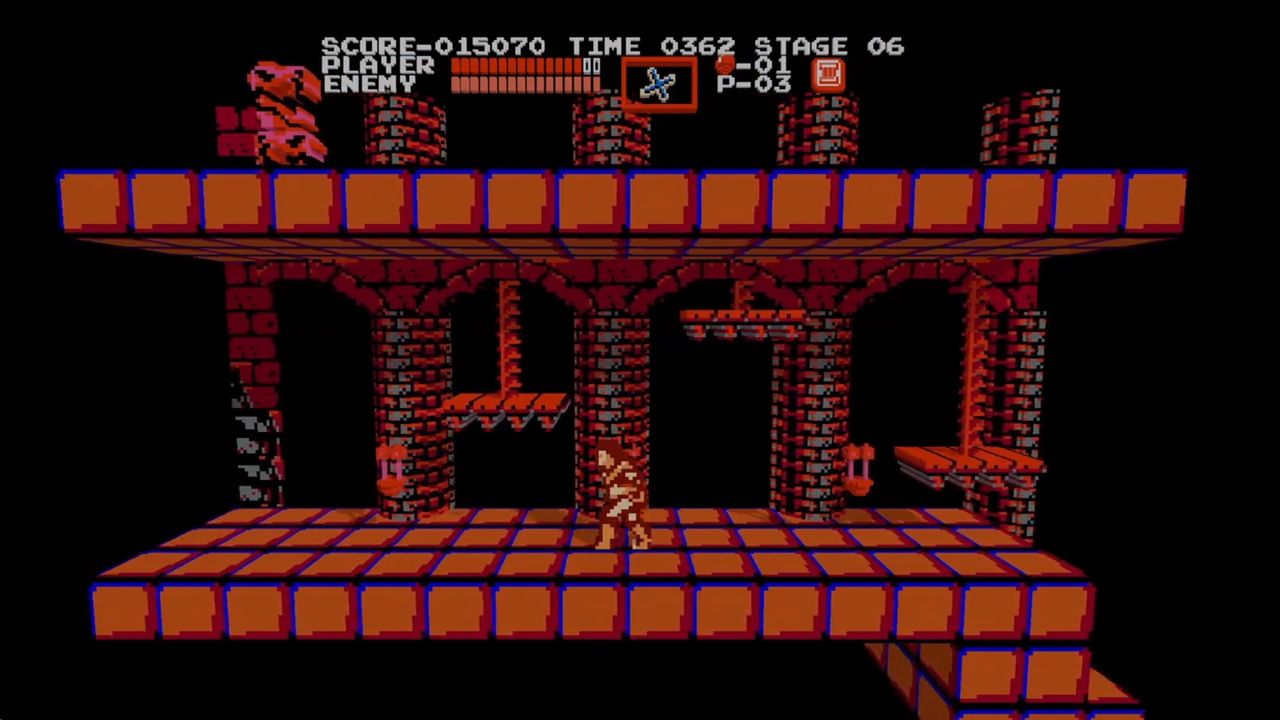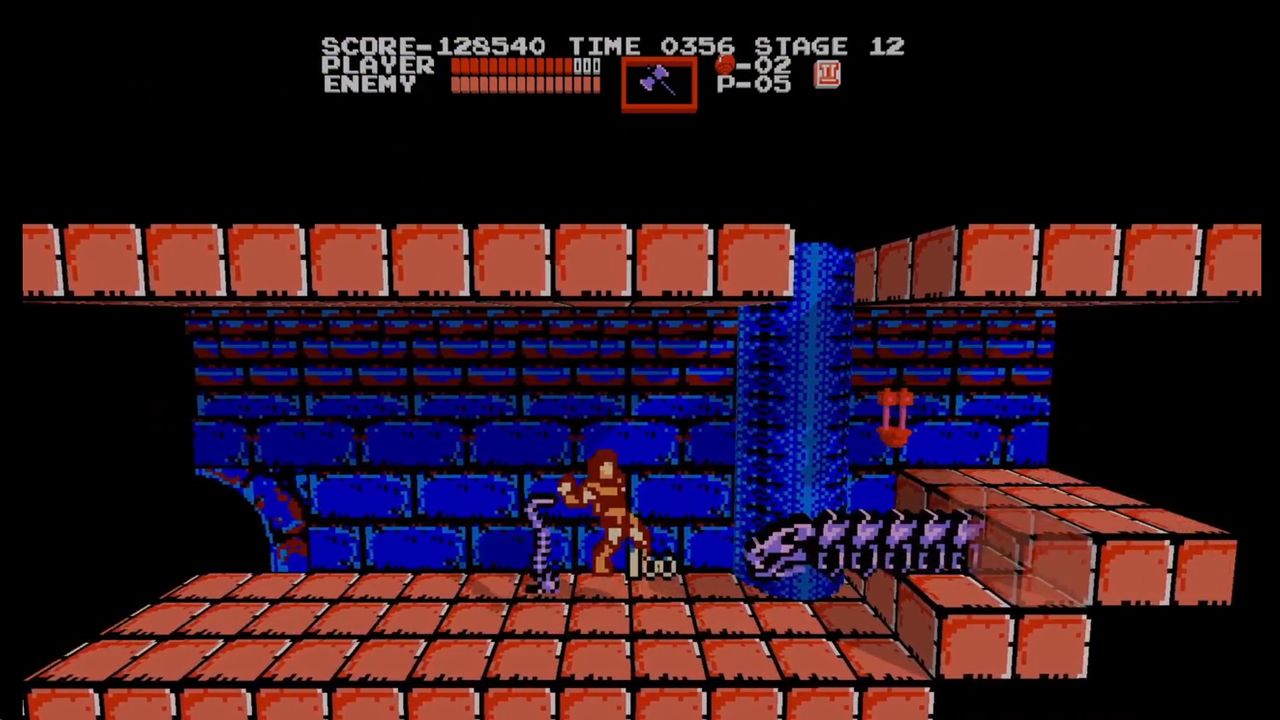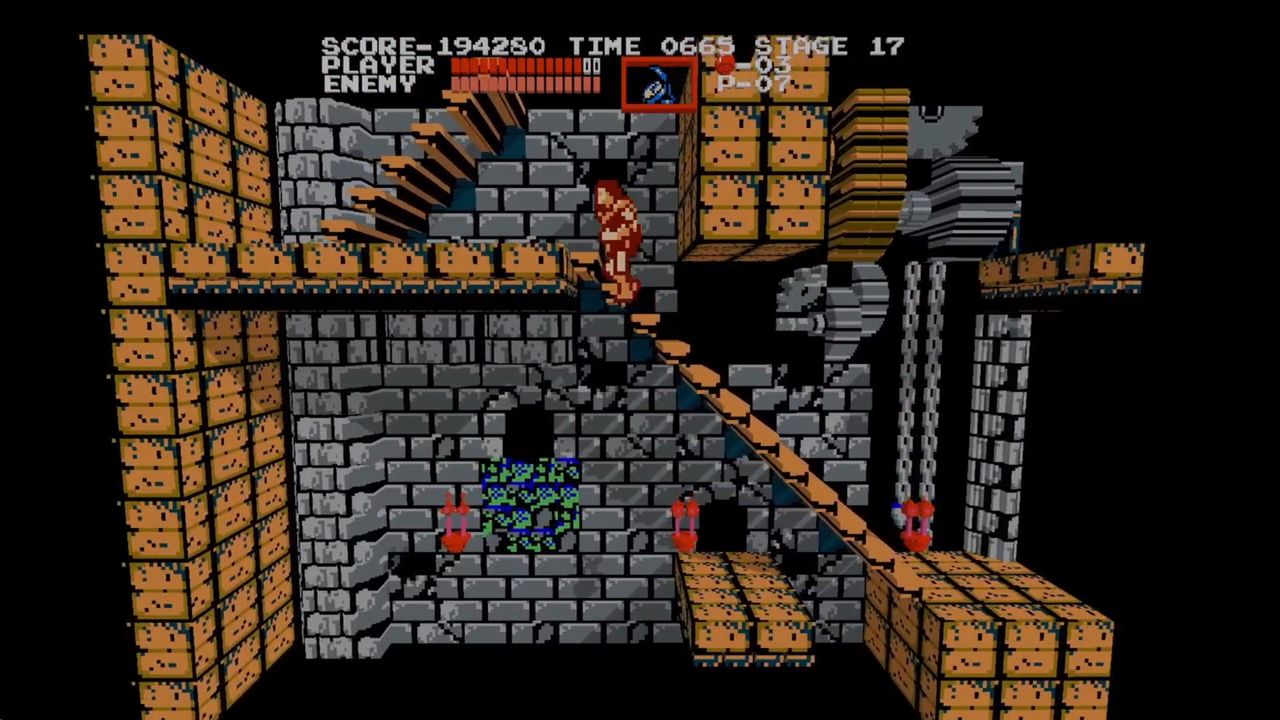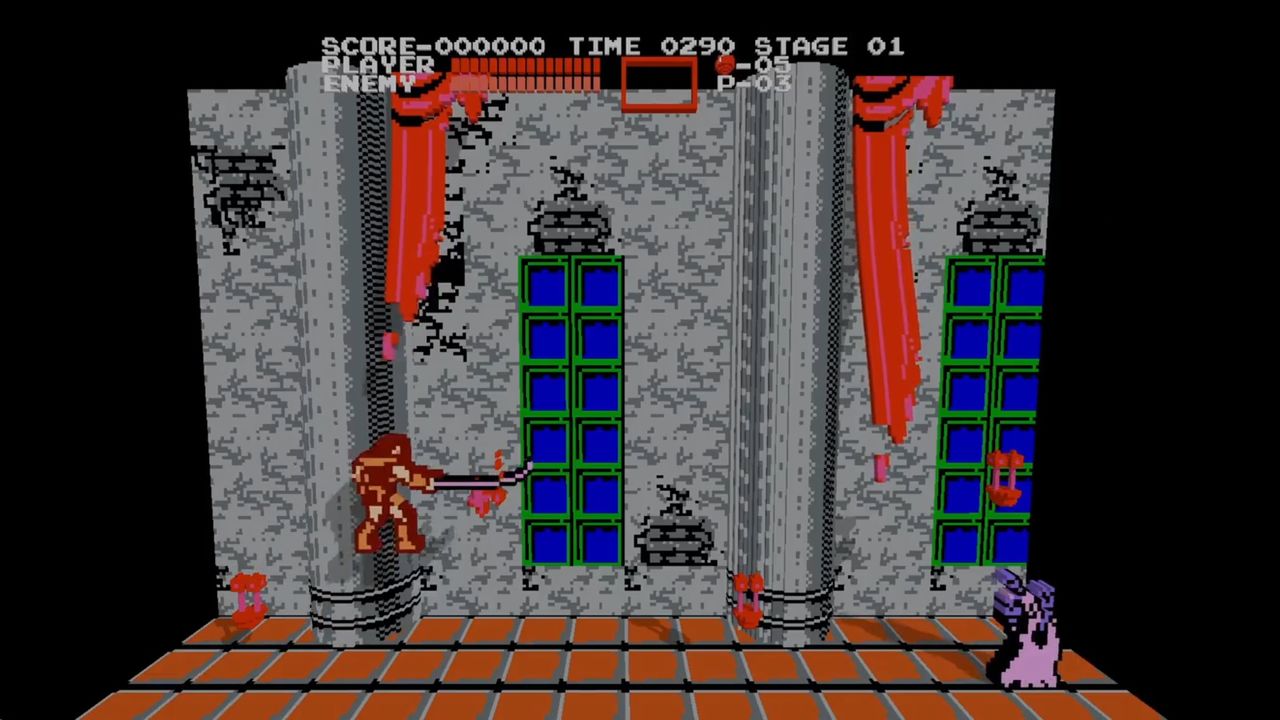
Castlevania builds each screen from layers of foreground brickwork, hallways and castle interiors. The original presents them as flat parallax strips; 3dSen gives each layer geometry and places Simon Belmont, the candelabras, columns and statues at their own depths.
The smaller details make the conversion work. A reviewer paused twice in Stage 1 to point out the great hall curtains, which wave toward and away from the camera instead of only moving side to side. Torches flicker as a 3D effect, and the broken staircases have visible treads when you tilt the camera down.
You can also pull the camera behind the action to see the back of the walls and Simon walking away from you. "That is just insanely awesome," the same reviewer said. It is not a useful play strategy, but it shows that the geometry is really there.
There is a trade-off in a precision platformer: jumps and whip timing can be harder to judge from an angled view, even though the mechanics are unchanged. Keeping the camera near the original side view helps in boss rooms and around difficult jumps.
In VR, the great hall surrounds you and the distance between Simon and the back wall is easier to perceive. The original physics, enemy patterns and difficulty remain untouched.